As we reminded you earlier, this is Banned Books Week, an annual event to encourage freedom of speech and reading and to discourage censorship. This year's slogan is "Think for Yourself and Let Others Do the Same."
We, along with other writing-oriented blogs, are inviting you to post a review of your favorite banned book in Comments here. You can find a list of banned books on the American Library Association website.
So we'll kick it off with a couple of reviews from our own editors.
Helen:
When I looked at the “Top 100 Banned/Challenged Books: 2000-2009” list, I was totally gob smacked. Many, many of these books are on assigned reading lists for high school students here in Australia. (High school starts at the seventh grade here, not the ninth.)
And not just books from lower down the list. Harry Potter (#1), The Chocolate War (#3), Of Mice and Men (#5), Huckleberry Finn (#14), Forever (#16), Go Ask Alice (#18), and Catcher in the Rye (#19) are compulsory reading books. I counted 20 I had read for class in school without even scratching my head to remember.
But the book I’d like to talk about is Pillars of the Earth by Ken Follett. This is an incredible book with detailed historical research (early 12th century Britain), fascinating facts about architecture and medieval life at different levels of society from the highest to the lowly, absolutely brilliant characters — engaging, well-drawn, fully rounded and the kind of people you love or hate or both in the same breath.
I cannot imagine why this book was banned. Yes, it has sex in it, but it is by no means erotic. Yes, at times it is a tad disrespectful of the established church of those days, but it is a sympathetic disrespect, not at all mean or nasty. There is some magic in it, but nothing evil. Basically it is a stunningly well-written epic novel that is ideal vacation—or long plane trip—reading. And the Cathedral they build is every bit as much a real character as the humans in the book.
This book gets 10/10 for characters, for plot, for story, for historical realism, and for romance. I have read and reread this book many times.
Raelene:
And Tango Makes Three by Justin Richardson & Peter Parnell (2005, Simon & Schuster)
This picture book is about real penguins at the Central Park Zoo in New York City. I'm not a big fan of anthropomorphizing animal actions--I wasn't fond of a few lines like "They had no baby chick to feed and cuddle and love." But overall this charming story focuses on instinctive penguin behavior in pair-bonding and that both parents share the nest-sitting and chick-care duties. It takes two full-time adults to provide enough warmth, food and protection to give a chick any chance of survival. In this case, it's two male penguins. Their keeper noticed that they were a "pair" and even built a nest; he placed an orphaned egg in the nest to see if they'd care for it, since it would not have survived otherwise. And it doesn't seem odd that they do indeed hatch the egg and raise the chick, since the males are only doing exactly what they'd each do anyway with a female partner. For penguin chick-raising, two daddies perform the same as a mommy and a daddy in their parental duties.
Same-sex attachments have been documented in a number of species. And in many studied cases, it is not a sexual attachment, it seems more based on the need to have a partner to survive in tough conditions. This true story has been demonized by those who feel it "promotes" or "condones" homosexual relations, who read between the lines or inflate what is really there. If you must compare it to a human situation, it is two men adopting and successfully raising a child. As the story describes to a child all the things adults do to care for babies, it is a celebration of parenthood. As the story says, they were "just like all the other penguin families."
Kelli:
Forever by Judy Blume
“Ms. Kwiatkowski, would you like to come to the front of the room and read some of your book for the class?”
“Um…no.”
Fuck no! No no no! Please God, oh shit no!
I was only twelve years old when this conversation took place but, thanks to my billions of older brothers and sisters, already well versed in the cursing arts.
The book in question was Forever, by Judy Blume. And I was reading it in class. In math class. Instead of paying attention. The reason for my colorful inner monologue? I had just gotten to the good part. You know. The part where Katherine and Michael do it (!!*teehee*!!) on his sister’s bedroom floor (on a multi-colored towel thoughtfully provided by Michael in case any bleeding occurred).
Of course, I had no idea this was about as far from “good” as sex could get. I was twelve, what do you want from me? And [spoiler alert! if you’re one of the three people who haven’t read this book] Michael and Katherine even break up in the end, which I realize now was the point of the title but as an impressionable pre-teen, was I pissed!
I learned years later how realistic Katherine and Michael’s timeless story is, however. In fact, if more schools and libraries allowed it space on their shelves, Forever probably would have scared some young tarts off sex until they were old enough to handle it emotionally. Because Ms. Blume had it right. For most of us, it does hurt the first time. We do indeed bleed (though not the buckets of blood I’d previously imagined). And while first loves seldom last forever, the emotions tied to them are everlasting. I credit Ms. Blume for helping me understand the difference, and teaching me to let go of the former by embracing the latter.
Oh, and that teacher? She took my book away, forcing me to save my allowance for three whole weeks to buy another copy! For all I know, she read the thing, possibly making me the reason it was later banned in our junior high school library (the reason I had to buy a copy to begin with; damn thing was always checked out). If that’s the case, um…sorry, Ms. Blume.
Meghan:
It's So Amazing by Robie Harris, with (wonderful) illustrations by Michael Emberley.
I have a seven-year-old daughter, and about two years ago we got the dreaded question: "Mommy, where do babies come from?" So we bought this book. And I could see right away why people would want to ban it--it's aimed at children and, horror of horrors, it's a really lovely, inclusive book about where babies come from. It starts with a discussion of biology, clearly and concisely addressing vaginas and penises, and skipping all the horrible "va-jay-jay" and "wee-wee" nonsense that you sometimes find in books aimed at children. It talks about how people get pregnant, how babies develop, and how families end up with babies.
It addresses different types of families (a mommy and a daddy, a mommy or daddy alone, two mommies, two daddies...), adoption, and medically assisted pregnancies in easy-to-understand terms. It manages to talk about complex, loaded topics like masturbation, people who get pregnant without meaning to and even STDs (including HIV and AIDS) in a very non-judgmental, child-appropriate way.
The book is presented almost like a comic book, with fantastic, colorful illustrations. It's narrated by a bird who's totally excited about everything...and a bee who's sort of embarrassed by the whole thing. The funny, awkward parts of sex and biology aren't glossed over, but are used to lighten and liven up reading material that could otherwise be dry.
Obviously, when you have a book that provides kids with loads of useful, age-appropriate information, the right thing to do is ban it as quickly as possible! Or you could do what I did--run out and by a copy for the kid in your life, and then spend some time reading it with them. We've gone over the book in full, and Maura keeps it in her bedroom, looking at it on a regular basis, and sometimes coming back to ask questions about this or that chapter. Engaged reading, age-appropriate material, and a kid who's educated about her body. What could be better?

What happens in the Cave doesn't always stay there... Conversations and news from Ellora's Cave Publishing, an erotic romance publisher.
Thursday, September 30, 2010


Wednesday, September 29, 2010
Books About Bad Things
by Raelene Gorlinsky
I used to complain about how so much of the currently popular YA fiction is dark, depressing, violent, frightening. It's either disturbingly dystopian or about the worst aspects of contemporary life. Why would we want to expose our children to that, and what is it doing to them emotionally? Then a librarian friend who specializes in YA books and really seems to understand the teenage mentality explained how these books help today's kids cope with the real fears in their world.
Now Janet Reid, a literary agent, has very eloquently defended this literature for our children.
http://jetreidliterary.blogspot.com/2010/09/i-believe-this-with-all-my-heart.html
I still don't enjoy reading these types of books myself--I read for escapism--but I no longer worry about those who do. Janet's right, we can't and shouldn't shield teenagers from reality. That would only lead them to think that if one of these awful things happens to them, they are alone in their experience, have nowhere to find support, and should feel guilty and ashamed for being the victim. Instead, much as we want to protect them, we have to give them the opportunity to face the bad things that can happen in life and learn to cope and survive. And if fiction about others in such a situation can do that, then I'm now all for it.
I used to complain about how so much of the currently popular YA fiction is dark, depressing, violent, frightening. It's either disturbingly dystopian or about the worst aspects of contemporary life. Why would we want to expose our children to that, and what is it doing to them emotionally? Then a librarian friend who specializes in YA books and really seems to understand the teenage mentality explained how these books help today's kids cope with the real fears in their world.
Now Janet Reid, a literary agent, has very eloquently defended this literature for our children.
http://jetreidliterary.blogspot.com/2010/09/i-believe-this-with-all-my-heart.html
"I think it is incredibly important that people who are learning how to live in the world get to read about people like themselves.
And very bad things can happen to people.
Let me be specific: I think it's incredibly important that books for teenagers about horrible subjects - rape, incest, school shootings, death - get published. And even more important that those books are available in libraries so kids can read them even if they can't afford to buy them, or don't want anyone to know they are reading them.
If I had my way, if YOU had your way, no kid would ever need to hear or see or know anything about rape, incest, school shootings, death. Not the kids we love. Not even the kids we don't.
But we live in the real world. A world we wish was different. But it's not. It is what it is."
I still don't enjoy reading these types of books myself--I read for escapism--but I no longer worry about those who do. Janet's right, we can't and shouldn't shield teenagers from reality. That would only lead them to think that if one of these awful things happens to them, they are alone in their experience, have nowhere to find support, and should feel guilty and ashamed for being the victim. Instead, much as we want to protect them, we have to give them the opportunity to face the bad things that can happen in life and learn to cope and survive. And if fiction about others in such a situation can do that, then I'm now all for it.
Tuesday, September 28, 2010
2009 Ten Most Challenged Books
To challenge a book is to request that it be banned from libraries, including school libraries, because it is "inappropriate". Inappropriate in what way, for whom? And who is to say what is inappropriate for me to read, or for me to decide my child can read.
Says Barbara Jones, director of ALA's office for intellectual freedom, "Even though not every book will be right for every reader, the ability to read, speak, think and express ourselves freely are core American values. Protecting one of our most fundamental rights - the freedom to read - means respecting each other's differences and the right of all people to choose for themselves what they and their families read."
According to the American Library Association (ALA), many hundreds of challenges are filed each year. The ALA records eighty-one instances in which materials were actually removed from schools and libraries in 2009.
According to the ALA, the ten most challenged titles of 2009 were:
1. TTYL; TTFN; L8R, G8R (series) by Lauren Myracle
Reasons: Nudity, Sexually Explicit, Offensive Language, Unsuited to Age Group, Drugs
2. And Tango Makes Three by Peter Parnell and Justin Richardson
Reasons: Homosexuality
[See review of this book on this blog Thursday.]
3. The Perks of Being A Wallflower by Stephen Chbosky
Reasons: Homosexuality, Sexually Explicit, Anti-Family, Offensive Language, Religious Viewpoint, Unsuited to Age Group, Drugs, Suicide
4. To Kill a Mockingbird by Harper Lee
Reasons: Racism, Offensive Language, Unsuited to Age Group
5. Twilight (series) by Stephenie Meyer
Reasons: Sexually Explicit, Religious Viewpoint, Unsuited to Age Group
6. The Catcher in the Rye by JD Salinger
Reasons: Sexually Explicit, Offensive Language, Unsuited to Age Group
7. My Sister's Keeper by Jodi Picoult
Reasons: Sexism, Homosexuality, Sexually Explicit, Offensive Language, Religious Viewpoint, Unsuited to Age Group, Drugs, Suicide, Violence
8. The Earth, My Butt, and Other Big, Round Things by Carolyn Mackler
Reasons: Sexually Explicit, Offensive Language, Unsuited to Age Group
9. The Color Purple by Alice Walker
Reasons: Sexually Explicit, Offensive Language, Unsuited to Age Group
10. The Chocolate War by Robert Cormier
Reasons: Nudity, Sexually Explicit, Offensive Language, Unsuited to Age Group
Monday, September 27, 2010
Fall Back
By Kelli "Slide Rule" Collins
So now that school’s started and most of the little beasties are clear of Walmart or Staples or wherever and I’m not in danger of tripping over little limbs (or strangling some squawking brat), I can safely indulge in my fall ritual—stocking up on school supplies!
No, I’m not a student, but I have a longstanding love of paper, pens, folders, etc. I’d always felt a giddy sense of anticipation while shopping for this stuff every fall, and the giddiness has followed me into adulthood. To this day, as I stand in the aisle weighing the benefits of liquid vs. stick glue, I can summon the bygone feelings of school dances, sleepovers and float-building committees; of begging my dad for use of the car to attend the first home football game (read: actually skipping the game and instead cruising all 1.5 miles of our main street over and over at 25mph); of tasting the first crisp wisp of fall on my tongue and carefully selecting that perfect first-day-of-school outfit. Even after entering high school and becoming the punk I am today, school-supply shopping was still a guilty pleasure.
We didn’t have iPods back then; we walked around campus with our trusty Walkmans hooked to our belts. Not a single student had a cell phone—or a computer, for that matter. And nearly everyone, boys and girls, took Typing 101, which featured (gasp!) actual typewriters. And yes, I painted my nails with the Whiteout. Often.
(It was only the hardcore geeks who took the one and only computer course available. The monitors were about 9 inches; green type on black backgrounds. I got a Brother WP1 Word Processor my sophomore year; the “screen” allowed you to see three whole lines of type and you saved your work on expensive little disks that held 240KB. I was the total shit!)
My annual trek got me thinking about some of my fave must-have school supplies that are no longer de rigueur among the Bieber-Twilight set (or hell, not even available anymore). So please indulge me while I take a visual stroll down memory lane to revisit some of my favorite fall buys.


 Pencil Erasers
 Friendship Pins
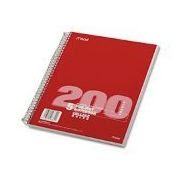 Ruled Notebooks

 Scratch and Sniff Stickers


So now that school’s started and most of the little beasties are clear of Walmart or Staples or wherever and I’m not in danger of tripping over little limbs (or strangling some squawking brat), I can safely indulge in my fall ritual—stocking up on school supplies!
No, I’m not a student, but I have a longstanding love of paper, pens, folders, etc. I’d always felt a giddy sense of anticipation while shopping for this stuff every fall, and the giddiness has followed me into adulthood. To this day, as I stand in the aisle weighing the benefits of liquid vs. stick glue, I can summon the bygone feelings of school dances, sleepovers and float-building committees; of begging my dad for use of the car to attend the first home football game (read: actually skipping the game and instead cruising all 1.5 miles of our main street over and over at 25mph); of tasting the first crisp wisp of fall on my tongue and carefully selecting that perfect first-day-of-school outfit. Even after entering high school and becoming the punk I am today, school-supply shopping was still a guilty pleasure.
We didn’t have iPods back then; we walked around campus with our trusty Walkmans hooked to our belts. Not a single student had a cell phone—or a computer, for that matter. And nearly everyone, boys and girls, took Typing 101, which featured (gasp!) actual typewriters. And yes, I painted my nails with the Whiteout. Often.
(It was only the hardcore geeks who took the one and only computer course available. The monitors were about 9 inches; green type on black backgrounds. I got a Brother WP1 Word Processor my sophomore year; the “screen” allowed you to see three whole lines of type and you saved your work on expensive little disks that held 240KB. I was the total shit!)
My annual trek got me thinking about some of my fave must-have school supplies that are no longer de rigueur among the Bieber-Twilight set (or hell, not even available anymore). So please indulge me while I take a visual stroll down memory lane to revisit some of my favorite fall buys.

No. 2 Pencils
The be-all-end-all of school supplies. I never did learn the importance of No. 2 versus, say…No. 1 or 3 pencils. I just knew I had to have them. And woe be the student who bought the wrong kind. Ridicule!

Trapper Keeper
Ah, Mead. You knew what students wanted. My Trapper Keeper had some swirly, sparkly cosmos scene, and I usually managed to keep everything within tightly organized. For about 3 weeks.

Texas Instruments Calculator
I had some deluxe jobby with triple the number of buttons as other calculators. Because obviously, the more buttons, the more you learn. I still have my calculator, actually (damn, those things were built to last!), and just like back in school, I still only use the plus, minus, divide and percent buttons.
 Pencil Erasers
Yeah, I usually had a lovely Papermate Pink Pearl as well, but I preferred the standard erasers that fit on the ends of pencils. For ease of chewing during tests, of course.
 Friendship Pins
Remember these? If you were a chick growing up in the ’80s, you likely wore them all over your shoes, in your hair, fashioned into necklaces and bracelets, etc. During sixth through eighth grades, I would make a shit-ton over the summer and give them to my BFFs on the first day of school.
 Ruled Notebooks
Well duh. One (or several) for every subject. I had one teacher who would go ballistic if his classroom floor was littered with the little bits of paper that flew like confetti when you tore sheets out of the book. (It was about that time I switched to the uber-sophisticated Composition notebooks. Nothing says “sophistication” like faux marbling. Nothing.)

Erasermate Pens
It’s ink! That you can erase!!! The technology, it boggled.
 Scratch and Sniff Stickers
SUPER popular when I was a young’un. They usually smelled like shit, lost their scent in about an hour and were a bitch to remove from all the ill-advised places you stuck them throughout the year (my elementary-school principal dedicated an hour on the last day of classes specifically for the task of removing stickers from our desks. Maybe that qualifies as janitorial experience if this whole book-editing thing doesn’t pan out).

Push-Up Pencils
Of course I had my beloved no. 2s, but push-up pencils were way too much fun. In cases of extreme boredom, I’d remove the top piece of lead-tipped plastic, push it back through the end of the pencil to reveal the next tip, then repeat. Over and over and over. It was always such a tragedy if the end cap broke and you lost all your lead.

Metal Compass
I think I still have scars from these things. And I’m sure they’d be confiscated as weapons at most schools these days.

Pencil Holders
I still use them. This is my current one. :)
Saturday, September 25, 2010
Favorite Banned Book Blogs
Banned Books Week is September 25 - October 2, 2010. This annual event, sponsored by a host of bookseller, library, and publishing organizations, celebrates the freedom to read and highlights the harms of censorship.
This year's slogan is "Think for yourself and let others do the same."
Like a number of other blogs, Redlines and Deadlines will celebrate Banned Books Week on Thursday, September 30, by asking people to post reviews of their favorite banned/challenged books. Post in Comments here, post on your own blog if you have one. Please participate with us.
You can find a list of the top 100 banned or challenged books of the last ten years on the American Library Association website:
http://www.ala.org/ala/issuesadvocacy/banned/frequentlychallenged/challengedbydecade/2000_2009/
If you've never looked at this list, you'll be stunned by what some people think you should not be allowed to read.
Friday, September 24, 2010
Punctuate the Day!
By Raelene Gorlinsky
Gasp, I don't know how we almost missed this! Today, September 24, is the seventh annual National Punctuation Day.
They have their own website with lots of fun and informative stuff:
http://www.nationalpunctuationday.com/
You can submit an entry to the NPD Punctuation Haiku Contest by September 30. You can see the woman who baked a meatloaf in the shape of a question mark. (Why?) You can see hilarious and heart-wrenching examples people have sent in of punctuation bloopers.
Tired of getting emails with dozens of exclamation points? (Or for editors, submissions where the writer clearly believed the story was more exciting if all periods were replaced by exclamation points.) The advice of mega-selling thriller author Elmore Leonard: "You are allowed only three in every one hundred thousand words of prose."
The most common punctuation error? The apostrophe. So many people don't bother to learn plurals versus possessives--and plural possessives. And let's not even discuss its versus it's and lets versus let's.
Doggone Good Staff!
by Raelene Gorlinsky
Here at EC, we try to provide employees with opportunities to expand their skill sets, move into new areas. So as Randy has taken on more responsibility for maintaining our computer systems, he needed help with things like building security and maintenance. Luckily, there was a highly skilled and motivated candidate available. And cheap--will work for treats!
Here's Phantom (Caamora Phantom Lad, TD) demonstrating his job.
It's important to watch the door and check out those mailmen.

Of course, despite my vigilance, sometimes some very strange people make it into the building.

Here, let me show you how to work the copier.

Wait a minute, no one told me about cleaning the snake cage!

Wednesday, September 22, 2010
Brilliant Bookcases
http://www.incrediblethings.com/lists/20-brilliant-bookcases/
Wow, the imagination of some people amazes me. What fun ways to store your print books. I want the Cave, the Butterfly, the Bed Case, the Yin Yang, the Circle Sofa, the ... Oh, wait, maybe I better start by getting a bigger house.
Wow, the imagination of some people amazes me. What fun ways to store your print books. I want the Cave, the Butterfly, the Bed Case, the Yin Yang, the Circle Sofa, the ... Oh, wait, maybe I better start by getting a bigger house.
Monday, September 20, 2010
Me Time - If You Don't Like It...
Editor-in-Chief Kelli Collins bitches about whatever’s bothering her this time.
I’m not embarrassed by what I do. I’ll just throw that out there right now. If I’m not afraid to tell my 82-year-old mother that I edit erotica, why would I care about anyone else’s opinion? If I was at all uncomfortable about working with erotica authors or editing erotic material, I just wouldn’t do it. End of story.
But plenty of people who abhor erotica continue to involve themselves in the genre. To say that pisses me off is putting it mildly.
I heard two horror stories last week, one from an author whose assigned editor told her she hates erotica, including said author’s story. (By the way, this was the author’s first book; nice intro to the industry, right?) The other was from an author whose erotic novel was reviewed by someone who hates the genre and had no issue sharing that fact in the review. (The review of the plot was positive, but when you start a review by telling all and sundry how much you hate the genre, it rather takes the shine off any positivity. Duh.)
I’ll keep this simple: If you don’t like erotica, DON’T EDIT, PROOF, CRITIQUE OR REVIEW IT.
Reviewers, I’m not so worried about. The plain fact these days: Anyone with enough time to register a blog page can declare themselves a reviewer. And I’ll take certain ones more seriously when they stop misspelling every other word and stop getting their jollies by passing off insults as “critique”.
Editors…you get the bulk of my ire. Why would you suffer through something you hate? You don’t eat food you don’t like. You don’t see movies you don’t like. Why would you read books you don’t like? Do you enjoy ruining an author’s publishing experience? Are you on a power trip? Or is it simply about keeping your job? After all, plenty of epubs assign books to their editors instead of letting them acquire their own…
You know what? Quit. Seriously. If your employer assigns genres you don’t like or don’t respect or are morally/religiously opposed to, or whatever, find another job. There’s a new epub starting every other day; surely one will be a better fit. When you hate what you do, you make the editing process miserable for yourself and the author; you deprive them of your best work and the chance to make their novel shine. You can’t give authors the full benefit of your talent, can’t help them develop theirs, if you don’t enjoy their work. It’s a simple no-brainer.
In the publishing industry at large, there’s a massive bias against romance authors. Literary snobs turn up their noses despite the fact romance sales account for more than half of the genre paperback bottom line. In the romance industry itself, there’s a bias against erotica authors. It’s been a struggle for authors and publishers to gain recognition from RWA, and I’ve heard more than one romance author opine that erotica isn’t a “legitimate” form of fiction, despite the fact it’s been around for centuries. Worse, some tell me they’d be “embarrassed” to write erotica. Good thing no one’s forcing you to write it then, huh?
Erotica authors face enough challenges without being additionally deflated by the person who’s supposed to believe in their talent the most—their editor.
Erotica authors are, in my opinion, bold, daring and brave, with a passion for writing that extends beyond the pages of their novels. They’re willing to try harder, revise more and suffer longer to get their break. They’re smart, savvy and, in the case of some of the earliest and biggest names in the genre, took a calculated risk on a largely unknown and untried format. Amassing fans and laughing all the way to the bank long before the big boys in New York began scrambling to catch up in the digital game.
No. I’m not embarrassed by what I do. But I’m grievously embarrassed by some of my more ignorant professional peers who think I should be.
Friday, September 17, 2010
New Editorial Assistant
Over the summer, Meghan acquired a new assistant. His name is Seamus.

Seamus is horrified by your failure to adhere to our clearly stated submission guidelines.

Seamus will certainly be requesting the full of this manuscript.

Seamus is hard at work. These submissions won't just read themselves, you know.
Subscribe to:
Posts (Atom)