by Nick Conrad
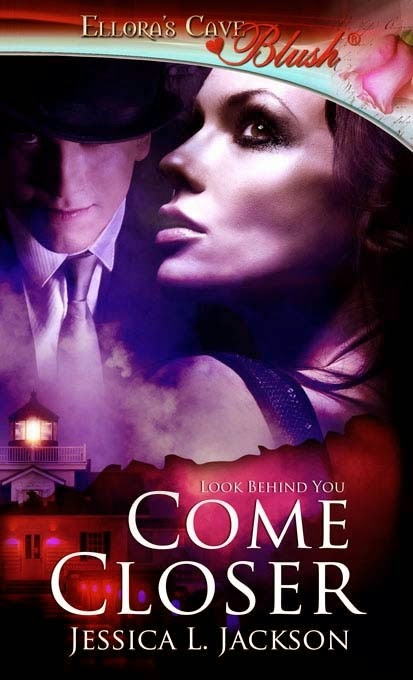
I have had authors ask me many versions of the following question: “I’m writing this suspense/romantic suspense, but it’s not a mystery because the killer is revealed early on. Is that okay?” The short answer, provided that the lack of mystery doesn’t compromise the author’s goals for the story, is yes. This article is the first installment in a short series about the differences between mystery and suspense and how they overlap.
Some publishers and book vendors group “mystery” and “suspense” together because there is frequent overlap of the two. However, “mystery” and “suspense” are not synonyms. Generally speaking, a mystery will contain some elements of suspense, whether it is a hardboiled thriller with lots of gore or a cozy mystery with nary a speck of violence or threat of violence. Stepping away from book genres for a minute, a mystery is an abstract object — a story with a missing piece. Suspense is a feeling that is evoked by an outside factor, be it fear, anticipation or curiosity. So most well-written mysteries will inspire feelings of suspense in various forms. Pick up a book by Edgar Allan Poe, Mary Higgins Clark, or John le Carré, and you will most likely encounter instances of danger for the protagonist and some kind of life-threatening menace. In a word, one might call these stories “hair-raising”. Meanwhile, there might not be anything particularly life-threatening or hair-raising about Donald J. Sobol’s Encylopedia Brown character trying to figure out who stole the neighbor’s pet frog, but the story still presents a compelling puzzle. Can the reader solve the mystery before Encyclopedia does? It becomes a race against the clock. The crime itself might not evoke fear or anxiety, but solving the puzzle presents a challenge to the reader — the suspense lies in the challenge.
So most mysteries contain some kind of suspense as a rule. But the fundamental part of a book that fits the mystery genre is the actual mystery — the whodunit and how it was done. In a suspense story, on the other hand, the heart of it lies in the feeling the story evokes. A suspense story can contain mystery elements to various degrees, hence the decision of some publishers and vendors to cross-classify; however, the mystery itself is not a requirement for suspense. The root of the suspense, then, is that the reader doesn’t know if the protagonist will “win” — will the killer be caught? Will the protagonist come out of the story alive? Will a satisfactory resolution be reached? A good example of how suspense can work without containing an actual mystery is the subgenre of romantic suspense. The protagonists’ relationship forms in the midst of a dangerous situation they are experiencing together. Often the relationship is intensified by these outside elements, bringing the protagonists closer together because of the emotional intensity of what they are going through. It also ups the ante for those characters’ investment in overcoming the conflict — they not only want to protect themselves and resolve the conflict, but they also have concern for each other’s safety and well-being. The emotional intensity and raised stakes in this instance can make for a whole new level of suspense.
To further explain suspense, we should look to the broader genre that contains it — thriller. The simplest definition of a thriller is a story that places the protagonist in extenuating circumstances, often well outside the realm of normalcy for them. Thrillers are often cross-genre, and many are mysteries. Murder or the threat of murder is almost always involved in some capacity, often framed as a race against time. It makes sense, then, that suspense fits neatly within this greater genre, and that an overlap exists between all three:
So, in a nutshell, mystery and suspense might be two different entities, but they can certainly make excellent bedfellows.
Sunday, May 18, 2008
Mystery or Suspense?
Posted by
ECPI Editors
0
comments
Labels: Publishing, Writing Advice
Thursday, May 15, 2008
Our Favorite Urban Fantasy Books
![]() |
1. Dark Hunter series by Sherrilyn Kenyon 2. Fiend series by Maureen Child 3. Good Omens by Neil Gaiman and Terry Pratchett 4. Guardians of Eternity series by Alexandra Ivy 5. Harry Potter series by JK Rowling 6. Memory Zero by Keri Arthur 7. Neverwhere by Neil Gaiman 8. Personal Demons by Stacia Kane 9. Practical Magic by Alice Hoffman 10. Summon the Keeper by Tanya Huff 11. The Hollows series by Kim Harrison 12. Weetzie Bat by Francesca Lia Block 13. Women of the Otherworld series by Kelley Armstrong |
Posted by
ECPI Editors
7
comments
Labels: Thursday 13
Friday, May 9, 2008
Returns - part 3: Reserves and Lists
by Raelene Gorlinsky
(See part 1 for the definition of returns and part 2 for shelf life.)
Reminder that I am discussing mainly genre fiction here (in mass market paper or trade paperback). Literary fiction and nonfiction have very different sales and return trends, as does anything in hardcover.
I see the same figures over and over again from many sources. Up to 50% average return rate for new mass market fiction paperbacks. Anything less than 30% returns on a title is considered fantastic. Reread that figure — half of the new paperback genre fiction releases ordered by stores are not sold to consumers, they are returned for credit!
It can take a year or more after publication to calculate a valid return rate. Publishers don’t even seriously consider return figures until minimum six months after the book is released.
There is usually no time limit on when a bookstore can return books. I’ve heard stories of publishers receiving returns three to five years after the publication date. And the whole bookseller process of ordering, stocking, and then pulling, shipping back - and doing all the associated accounting steps at the publisher - just takes a long elapsed time.
Reserves Against Returns
So, you had a new book release. Typical NY print publication involves an initial advance against royalties, and then a royalty accounting every six month. So about nine months after your new book released, you should be getting a royalty statement from your publisher showing the sales figures for the first six months. The figures shown on your statement are the books the bookstores/distributors paid for, less the number they returned for credit. IF royalties earned on actual sales exceeded the advance you received, you would be due those additional royalties. And that also applies to all future royalty periods.
HOWEVER - your publisher knows that it is highly likely that more returns will be coming. If they pay you royalties on all the copies shown as sold in this period, ultimately they would have overpaid you. Using some small round numbers for an example: 1000 copies sold, 200 received back as returns in first six months = 800 sold; but publisher anticipating another 150 returns, for "real" sales of 650. Crediting the author with royalties for 800 copies would mean that next accounting cycle you the author could be "in the red" by the amount of royalties for 150 copies. It's not like the publisher is going to send a collection agent to your door to get that money back; they want to avoid overpaying in the first place.
So check your contract - you will find a clause about "reserves against returns". Basically, it says the publisher can withhold a certain percentage of your royalties for some period of time, in order to balance against anticipated future returns of the book. The contract may not specify the exact percent or time period, it may just say "reasonable" or "based on experience" or something vague like that. What authors have told me is that 25% reserve for up to two years is pretty common.
E-Books and Returns
Note that none of this applies to e-books. E-book sales are direct to consumer, so there are no bulk returns. Therefore WYSIWYG when it comes to your royalty statement. And that's why e-publishers can pay on a monthly or quarterly basis - they don't have to wait months to see how many returns come back from the initial sales before figuring out what your real sales were. And therefore no reserves against returns for e-books.
Best Seller Lists - shipped vs. sold
As should be clear by this discussion, booksellers love the returns system, and publishers (and authors) hate it. But there is one "we don't want to admit it" reason why some publishers have an ulterior motive for not pushing harder to change the system.
There are several high-profile bestseller lists - most well known are New York Times and USA Today. Most of these lists do not reveal their "secret formula" for how they calculate what's a best-seller. For example, Amazon doesn't tell anyone the factors and weighting that go into their hourly sub-sub-genre bestseller lists. But it is known that some lists are based on number of copies of a book shipped, not number of copies sold. (This made sense in the day when immediate and accurate sales numbers were not available quickly enough - if the book went on sale this week, the list calculations want a number for the week.) So if a publisher can report 100,000 copies ordered and shipped to stores, rather than that you shipped 100,000 but sales for the week were 50,000, you've got a better chance of hitting some lists. If the industry agreed to limit or eliminate returns, stores would be ordering far fewer copies to start, which would make your shipped number smaller. (This, of course, mainly affects the big New York publishers - small presses rarely have the numbers to reach an important list.) There are even occasional rumors of a NY publisher shipping more copies than ordered, even though they know those extras will likely come back as returns, just so they can have a higher shipped number and a better chance at a bestseller lists.
And hey, it could become a self-fulfilling prophecy - if readers see the book on a bestseller list, more of them might decide to buy it.
Posted by
ECPI Editors
3
comments
Labels: Publishing
Thursday, May 8, 2008
Our Favorite SciFi/Futuristic Books
Yep, we read anything and everything - all genres. Just give us books!
![]() |
1. A Wrinkle in Time by Madeleine L’Engle 2. An Accidental Goddess by Linnea Sinclair 3. Brave New World by Aldous Huxley 4. Dangerous Visions by Harlan Ellison 5. Dhalgren by Samuel R. Delany 6. Do Androids Dream of Electric Sheep by Philip Dick 7. Dune by Frank Herbert 8. Change by Ann Maxwell 9. Fahrenheit 451 by Ray Bradbury 10. Hitchhiker's Guide to the Galaxy by Douglas Adams 11. Scout's Progress by Sharon Lee and Steve Miller 12. The Sirens of Titan by Kurt Vonnegut 13. Starship Troopers by Robert Heinlein |
Posted by
ECPI Editors
11
comments
Labels: Thursday 13
Sunday, May 4, 2008
Returns - part 2: Shelf Life
by Raelene Gorlinsky
(See part 1 for the definition of returns.)
Reminder that I am discussing mainly genre fiction here (mass market paper or tradepaperback). Literary fiction and nonfiction have very different sales and return trends, as does anything in hardcover.
Shelf Life
We all know that Harlequin/Silhouette category romance books have a fixed one-month shelf life in bookstores (although available longer through the eHarlequin website). The August Harlequin Blazes are put on the shelf on a set date. Thirty days later, any of those left are removed and the September Blazes are put out. The unsold copies are returned.
But all books, not just category romances, have a shelf life. The typical time period in chain bookstores is one to three months, although this does vary. Stores record when they put out a new book. Several months later, unsold copies are pulled from the shelves (they might keep one copy) and returned to the publisher. Unless the store sold out of the original stock and reordered more copies—that “resets” the shelf date.
Shelf life cutoffs are only sensible—stores have to make space to put out the new releases. Typically, most of the sales occur in the first month or two after release. There are some exceptions. Seasonal or holiday books have a different shelf life. A store may continue to carry the books of a local author. Backlists of mega-authors will always find space on the shelves—you’ll be able to find reprints of older Nora Roberts books anytime. And when a very popular series author comes out with a new release, a store will order lots of the new book and may also make sure they have one copy of each of the previous books in the series. A store may notice how well a certain author’s books do overall, and plan to keep at least some titles around perhaps longer than they normally would. (Independent bookstores are especially good for this.)
But face reality—sales of a specific title will taper off sharply within a very short period after release. After a while, the unsold copies will be returned by the store.
Posted by
ECPI Editors
1 comments
Labels: Publishing
Friday, May 2, 2008
The Dreaded Returns - part 1
by Raelene Gorlinsky
If you are not a published author, or you are published in digital, not print, you may not yet be familiar with the publishing industry oddity of “returns”. An outmoded practice that just doesn’t fit in the contemporary business climate, it is a massive waste of paper and time, and a major source of money headaches for publishers and authors.
What are “returns”?
Bookstores and book distributors traditionally over-order the number of books they think they can sell. By a lot—like as much as 50% more in the case of paperback genre fiction. The store doesn’t want to take any chance that they might, gasp, run out of copies and have a customer go elsewhere to buy the book. And there is no “penalty” to them for over-ordering.
After a couple of months (as short as one month for a new mass market genre fiction, typically a couple of months for a trade paperback), the bookseller returns the unsold copies to the publisher for credit. The industry average for returns (paperback fiction) is 30% to 50%; rates below 30% for romance mass market paperbacks are almost unheard of. Mass market paperbacks are “stripped”—the bookseller rips off the cover, discards the book pages, and mails just the cover back as proof. The over-order/return rate on trade paperbacks is often slightly lower than mass market paperbacks, because trades are not stripped; the bookseller must return the full undamaged book. And the bookseller usually has to pay the shipping—sending back hundreds of covers is cheap, shipping trade paperbacks is not, so the bookseller tends to place a more realistic original order.
Some small presses do not accept returns. This can simplify their accounting and tracking and warehousing procedures, but it has a major disadvantage for sales. Many, many book distributors will not carry non-returnable books. And bookstores often won’t order them unless the purchaser pays in advance and is willing to wait six to twelve weeks—not an inducement to a buyer.
Here’s a summary explanation from The Seven Signposts: A Guide to Profitable Publishing by Eric Kampmann:
"Books have been sold on a returnable basis since the 1930’s when some of the major publishers decided to offer accounts an incentive to take greater up front risks. We have been living with the aftermath of this innovation ever since.
"Today, new titles generally experience a 30% to 60% return rate. Books stay on the shelf about 90 days and then come back if they are not moving at sufficient speed. The situation is even worse with mass-market retailers like Walmart and Target.
With backlist titles the story is different. Here, returns will run between 5% and 15% of sales."
Next week, a little more on returns and on the shelf life of books.
Posted by
ECPI Editors
4
comments
Labels: Publishing
Thursday, May 1, 2008
Our Favorite Mystery Books
Editors are readers - they love books. If they didn't, they wouldn't be in this job. So ask a group of editors about their favorite books, and it can trigger great discussions. We're pleased to find titles for which several of us share a love, and surprised that what one of us loves another can't stand. Or how we classify books -- are the In Death books by Nora Roberts mysteries or futuristics or even romance (well, my favorite element is definitely the Roarke/Dallas relationship)? So here' s the very diverse list that came out of our "what's your favorite mystery book?" discussions. What are your favorites?
![]() |
1. Heartsick by Chelsea Cain 2. Any old-fashioned mysteries from Agatha Christie 3. The Bone Collector by Jeffery Deaver 4. Lincoln Rhyme series by Jeffery Deaver 5. Man Overboard by Lara Diamond 6. The Maltese Falcon by Dashiell Hammett 7. The Beekeeper’s Apprentice by Laurie King 8. Lost by Gregory Maguire 9. From Hell by Alan Moore & Eddie Campbell 10. An Unkindness of Ravens by Ruth Rendell 11. In Death series from J.D. Robb 12. Mortal Wounds by Nikki Soarde 13. Eye Witness by Kennedy Vance |
Posted by
ECPI Editors
9
comments
Labels: Thursday 13
Friday, April 25, 2008
The Action Heroine's Handbook
Posted by
ECPI Editors
12
comments
Labels: Book Reviews, Writing Research
Thursday, April 24, 2008
Thirteen Things We Did Instead of Last Week's Thursday Thirteen
When the cat's away... One of the last things I said to the editorial staff as I left the office last week for a convention was, "Mind the blog." When no Thursday Thirteen appeared, I assumed they were all so busy with their first priority of editing that they just couldn't get to it. Now I find out what they were really up to...
![]() |
1. At 9:01 a.m. we staggered through the doorway, bleary-eyed, and began the arduous trek toward the coffee pot. 2. At 9:34 a.m. we played Paper, Rock, Scissors over who got to wield Raelene's whips for the day. 3. At 10:15 a.m. we argued over the finer points of wereduck romance. 4. At 11:45 a.m. we were still arguing when our stretch limo pulled up to take us to lunch. 5. Noon to 1:00 is sort of a blur. We dined on bull testicles and had our first three rounds of martinis. 6. At 1:12 p.m. we were still drinking martinis, save for the unnamed editor who had passed out facedown in her drink. 7. At 2:21 p.m. we arrived back at the office to find all of our red pens missing and the dictionaries taped shut. The ransom note indicated that it was the work of the nefarious warehouse staff. 8: At 2:22 p.m. we launched a full-out attack to secure the return of our pens. 9. At 2:56 p.m., suffering from multiple paper cuts, we crept back downstairs and finally fired up our computers. 10. At 3:13 p.m., exhausted from firing up our computers, we took a nap. 11. At 4:39 p.m. we began to wake from our naps, sluggishly peeling Post-It note eyemasks off of our faces. 12. At 4:55 p.m. we shut down our computers and congratulated ourselves on a day well-spent. 13. At 5:01 p.m. we trekked out to our cars...and realized too late that with all the work we had been doing, somehow we had forgotten to post a Thursday 13. |
Posted by
ECPI Editors
6
comments
Labels: Thursday 13
Tuesday, April 22, 2008
Conference Connections
by Raelene Gorlinsky
I was at the RT convention last week for less than 48 hours, but it was enough to remind me of a very important and enjoyable benefit to conference attendance by publishing company staff. Yes, we go to promote our company, to share our knowledge through workshops, and to reach aspiring new authors via pitch appointments or other meetings.
But so important is the opportunity to talk directly with our existing authors, the people who already write for us. We communicate a lot via email and online discussion loops, sometimes by phone. But in-person contact is pretty much limited to seeing them at conferences. (And let me apologize here for my very poor ability to match names with faces. My mind has a list of many hundreds of author names, and a "mental database" of faces - but very few connecting lines between the two.)
There were about one hundred ECPI authors from our three imprints at the RT convention. In my two days there, I had conversations with them in the hallways and elevators, sit-down meetings in the lobby and in my room; I had breakfast, lunch and dinner with our authors.
So why were we meeting, what was the point for them or me? After all, I'm not their editor, so we weren't discussing their current book in development. And I maintain a business, not personal, relationship with authors, so this wasn't social chit-chat about their families or lives or whatever. I'm their publisher and represent the company, and they generally want some dialogue based on that.
Some authors just needed reassurance and encouragement. "Are you happy with my sales? Am I a good author? Does my editor love me? Am I doing things 'right'?" (And btw, my personal definition of an author doing things right comprises only two items: you are producing books that sell well, and you are behaving in a professional and reasonable manner in all aspects of your "job" as author.) Others wanted to talk about their career planning: the trend in their sales, what types or genres of stories would be most marketable for them to write, promo ideas. Several said "I have this great story idea that I want to run by my editor, but could you give me your opinion first?" Some wanted to hear firsthand about upcoming company activities, or wanted a chance to tell my their ideas and opinions. And yes, some wanted to complain or to tell me about problems. And that is perfectly fine and valid - I can only fix things if someone tells me they are broken, and I accept and appreciate all opinions even if they don't match what I or the company decide. A few wonderful authors just wanted to say "thank you" to me or the company.
I'm not a touchy-feely person. Even the social hugs so common at these events are hard for me. But I absolutely love meeting our authors, connecting with them directly, talking to them about their books. Yes, authors are a representative subset of human beings - there are nice and not-nice; the reasonable and the unreasonable; the ones I don't feel sympatico with and the ones I think "If we weren't business associates, I'd love to have her as a personal friend." But we share our involvement in the publishing industry overall and in our specific publishing company, our need to figure out how to succeed in this career. So the chance to deal directly with "our" authors is for me the best benefit to attending industry conferences.
Posted by
ECPI Editors
3
comments
Labels: Conferences